
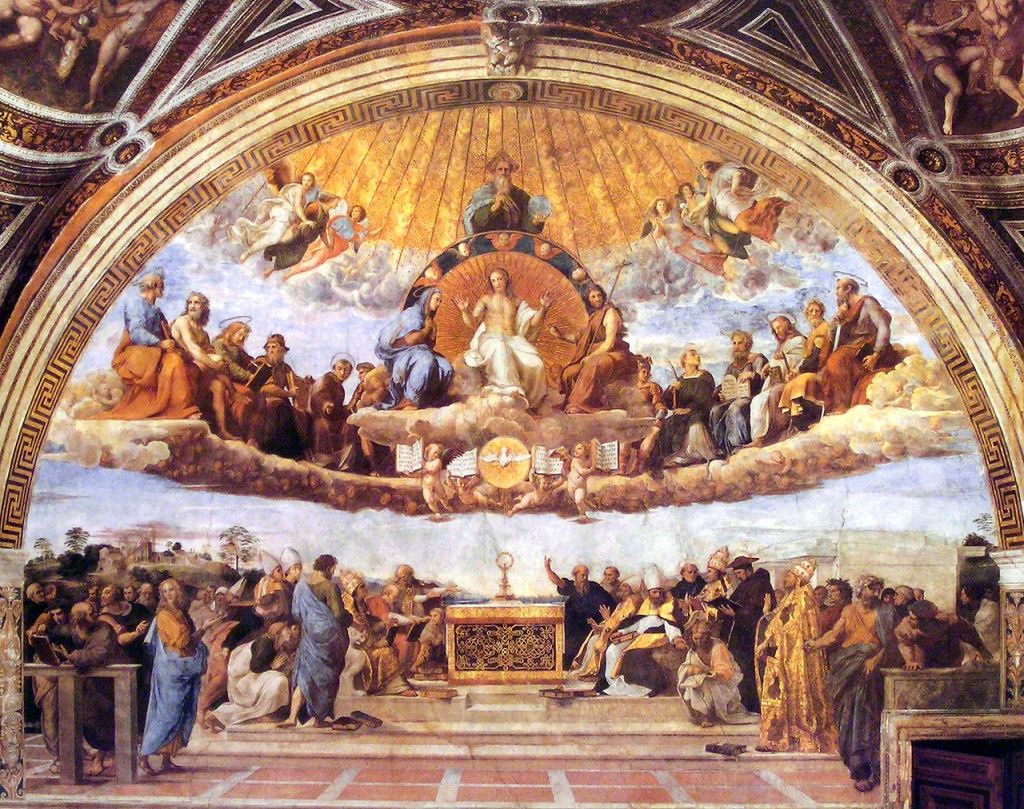
“WAIT. Wait, wait, wait!”
I was fuming. I was mid-debate with Beatrice (still not her real name), and it was not going well.
“So, you’re telling me that if I were to go to Mass, I couldn’t receive communion? What the heck!” I ranted. “Are you joking?”
“Well,” Beatrice began. I cut her off.
“What on earth! I mean, how elitist is that! But we have the same faith!”
“We do,” Beatrice said, “in so many ways.”
Beatrice was close to becoming Catholic. I was not close to convincing her otherwise.
“Then why couldn’t I participate in communion?” I railed. “That is just beyond offensive.”
“Because Catholics believe something totally different from Protestants about communion – or “the Eucharist,” as Catholics call it,” she replied. “Catholics believe that the bread and wine really become the Body and Blood of Jesus.”
“Okay,” I retorted stoically, “I also believe it’s really Jesus.”
“No,” she replied, “Catholics believe it is REALLY Jesus. As in, Jesus is truly there, on the altar, at every Mass. That He really BECOMES the bread and the wine.”
“I mean, yeah, I believe that when I receive communion at church that I’m receiving Jesus as well,” I said, wondering how we were becoming so adept at speaking past each other.
“No,” Beatrice said again, taking a deep breath. “When Protestants go to church, yes, they believe they are receiving Jesus by faith, in a spiritual sense. But when Catholics go to Mass, they believe they are really receiving the true Body and Blood of Jesus, under the appearance of bread and wine.”
I still didn’t get it.
- Substance and Accidents
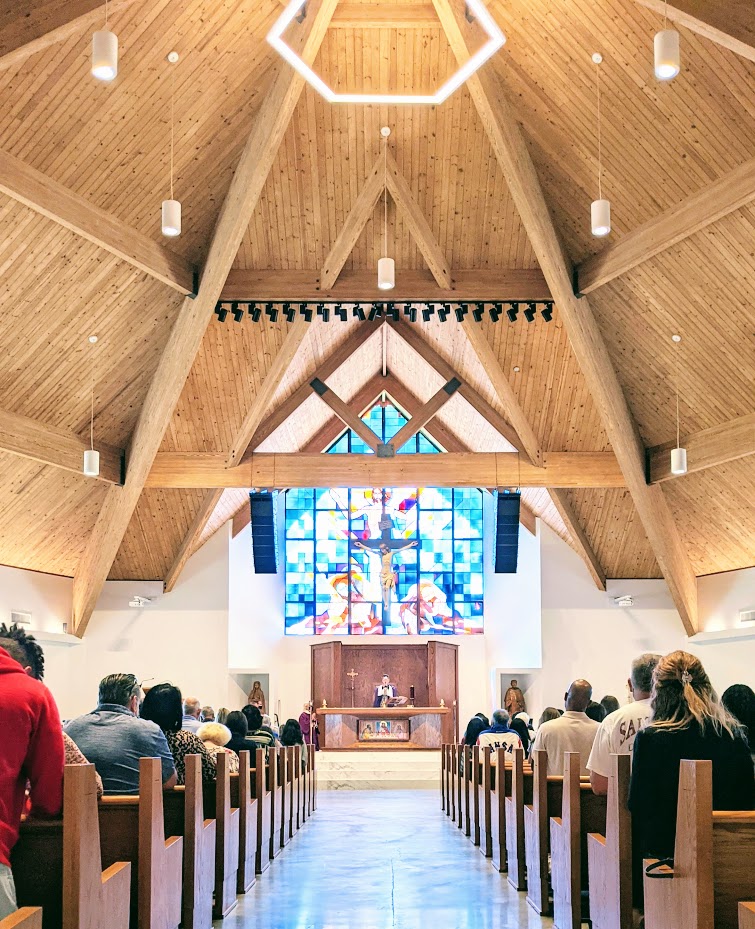
“I’ll explain,” she went on. “At Mass, when the Priest holds up the bread and the wine and prays the prayer of Jesus from the Last Supper – “take this, all of you, and eat of it: for this is my Body…this is the chalice of my Blood” – Catholics believe that, by the power of the Holy Spirit, the substance of bread and wine changes into the substance of Jesus. His very Body, His very Blood, His Soul and Divinity – truly and fully present.”
I was silent, taken by surprise.
She went on.
“When Jesus says, “do this in remembrance of me,” Catholics point out that “remembrance” is much more than a “calling to mind.” The word “remembrance” is understood to have the same meaning that the Jews have always applied to Passover. The Passover celebration was not only a memorial. The Jewish people believed the first Passover became real and present every time they celebrated it. In the same way at Mass when Catholics “remember” Jesus’ one perfect sacrifice on the cross – the perfect fulfillment and completion of all prior earthly Passovers and sacrifices – they believe they are, in a real way, present at Calvary where Jesus’ one sacrifice is eternally presented to the Father, and the Father eternally accepts it.”
“Wait,” I interrupted, “so at every Mass, Jesus is being killed? I thought His death was “once for all,” like Hebrews talks about.”
“Catholics believe the sacrifice of the Mass is the sacrifice of the Cross, only presented in a different manner,” she replied. “The redemption accomplished by Jesus’ death is finished – it’s done. But Jesus is the eternal high priest – the “lamb looking as if it was slain,” as Revelation 5 says – who is eternally present to the Father, offering His one sacrifice on our behalf, forever. There is one heavenly offering, and the Mass is a participation in it.”
“In fact,” Beatrice continued, “Catholics believe that the “consecration” of the bread and wine into the Body and Blood of Jesus at Mass is a glimpse into the heavenly liturgy – a “two-way mirror,” so to speak, into heaven. Receiving Jesus at Mass is a foretaste of the total union that is to come in heaven. This is why the Eucharist is the “source and summit” of the Catholic faith. It’s the biggest deal on earth – and in heaven! – for Catholics. This is a big part of the reason it is so important that those who receive the Eucharist understand and believe, before they receive.”
I remained silent. Despite myself, and to my surprise, I felt awe.
I was suddenly aware of an ache in my heart. If what she was saying was true, then I wanted it more than I’d ever wanted anything else in the world. The ache, the hunger, was instant.

But I also still didn’t understand, so I pushed it aside in order to beleaguer her some more.
“If it’s really Jesus, then why would Catholics keep anyone from receiving Him?” I rebutted. “Isn’t that the opposite of what we are supposed to do as Christians?”
“Anyone can come receive Jesus at Mass. You just have to become Catholic first,” she answered.
“I don’t like that,” I replied.
“Why?” She asked, surprised. “If you go to a Protestant church and there’s a communion service, many pastors explain that communion is for Christians only, but that all are welcome to enter the faith. Would you say they are being “elitist”? Should non-Christians or atheists be offended that they often can’t partake in communion at a Christian church? Of course not. Receiving communion is a sign of the faith you profess, and it has always remained the symbol of the Church’s unity. It’s a serious thing, and it’s extremely important, according to the Bible, that people know what they are doing before they receive it.”
I nodded, not sure what to say.
“It’s the same concept in Catholicism,” she went on. “If you go to Mass and walk up the aisle to receive communion, the priest will hold up the Eucharist to you and say, “the Body of Christ.” What the priest means by “the Body of Christ” is extremely different from what a Protestant means by “the body of Christ.” If you say “Amen” in response to the priest, that means, “I believe!” As in, I believe it is really Jesus Whom I am receiving into my body: wholly, fully, truly present. If you don’t believe that, then you would be lying if you received it.”
“But don’t Protestants believe that Jesus is really present when we receive Him?” I asked, feeling like I should have way more knowledge about this.
“Protestants believe that communion is a time of remembering the Last Supper and Jesus’ sacrifice for us. Some Protestants think Jesus is truly present in a spiritual way in the bread and wine, but that the bread and wine do not actually become Jesus. Other Protestants think that communion is only a memorial, that the elements remain symbolic only. For Protestants it’s a time of devotion to Jesus; a time to remember all that He has done for us. But they don’t think the bread and wine become the Body and Blood of Jesus.”
Beatrice went on.
“Catholics believe that through the power of the Holy Spirit and the instrumentality of the priest, the whole Christ is truly present under the appearances of bread and wine at every Mass.”
“Why?” I asked.
“Because God loves us,” she replied, simply. “It is an offer of total intimacy, the fulfilment of all the sacrifices of the Old Testament, the true manna from heaven, a foretaste of heaven, and a glimpse of that for which we were created.”
I had a lot to ponder. And a lot to ask.
“How do you know the Catholics are right about the Eucharist?” I asked Beatrice.
“Because the early church taught the same thing, and because those early church teachings are clearly derived from the Bible,” she answered. “Let’s start with Scripture. We’ll take three passages, for starters.”
- Biblical Support
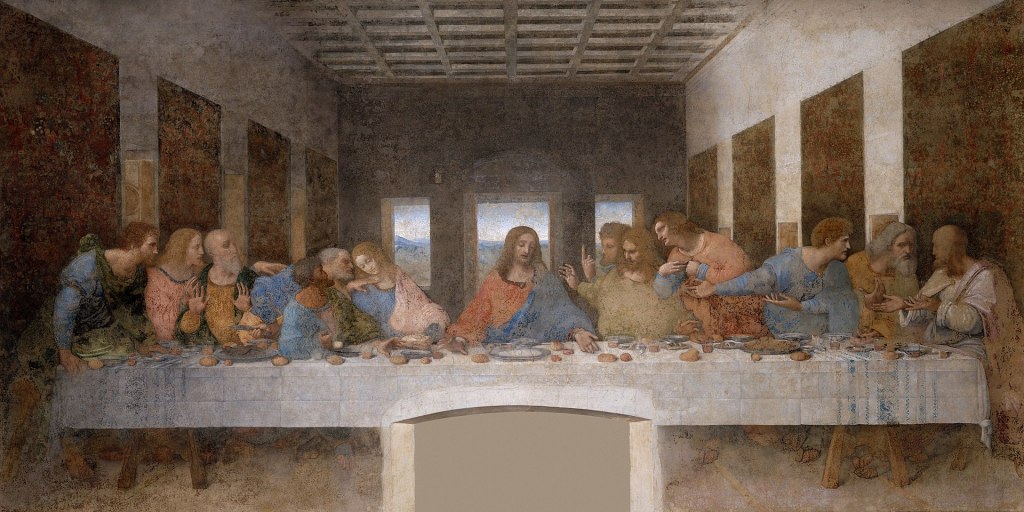
“Obviously, this is barely scratching the surface,” Beatrice began, “but let’s start with the Last Supper. Three Gospel accounts say, “While they were eating, Jesus took a loaf of bread, and after blessing it he broke it, gave it to the disciples, and said, “Take, eat; this is my body.” Then he took a cup, and after giving thanks he gave it to them, saying, “Drink from it, all of you; for this is my blood of the covenant, which is poured out for many for the forgiveness of sins” (Matthew 26:26-28; Mark 14:22-24, Luke 22:17-20). Jesus calls the bread His Body, and the wine His Blood. Catholics take Him at His word, and can demonstrate that the early church did as well from its earliest days.”
“But Jesus speaks metaphorically all the time,” I said. “He calls Himself a “gate” (John 10:9) and the true “vine” (John 15:1) as well.”
“Sure,” she replied, “but look at the reaction of the crowd after he says these things. The crowd doesn’t say, “how can He say He is made out of wood?” or “how can He claim to be a plant?” They know Jesus was speaking in metaphor. But take a look at my next example, in John 6 – the crowd did not think Jesus was speaking metaphorically then.”
She found the correct page in her Bible, and began to read.
“Jesus says this: “I am the bread of life. Your ancestors ate the manna in the wilderness, and they died. This is the bread that comes down from heaven, so that one may eat of it and not die. I am the living bread that came down from heaven. Whoever eats of this bread will live forever; and the bread that I will give for the life of the world is my flesh.” The Jews then disputed among themselves, saying, “How can this man give us his flesh to eat?” So Jesus said to them, “Very truly, I tell you, unless you eat the flesh of the Son of Man and drink his blood, you have no life in you. Those who eat my flesh and drink my blood have eternal life, and I will raise them up on the last day; for my flesh is true food and my blood is true drink. Those who eat my flesh and drink my blood abide in me, and I in them” (John 6: 48-56).”
“Okay, but how do you know that Jesus is speaking literally here?” I asked.
“What indication do you see in this passage that Jesus is speaking symbolically?” She asked in reply. “Look at what happens next.”
- Trogo
She cleared her throat and continued.
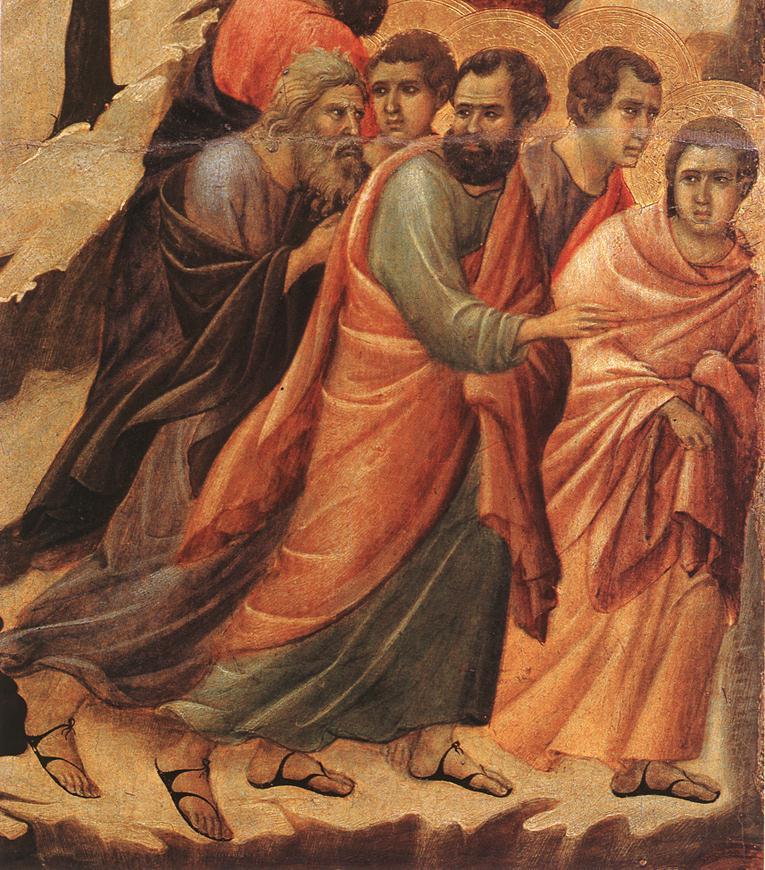
“The Jews dispute Jesus’ words and ask, “how can this man give us his flesh to eat?” But Jesus never backs down. He doesn’t say they are misunderstanding Him, as He does elsewhere (John 4:32-34; Matthew 16:5-12) – Jesus sticks to what He is saying, and even ups the ante. In verses 50-53 when referring to eating, Jesus uses different forms of the word phago. But after Jesus is challenged by the Jews (verse 52: “How can this man give us his flesh to eat?”), He switches to a different word. When Jesus responds to the questioning crowd the second time, he states, “Those who eat my flesh and drink my blood have eternal life, and I will raise them up on the last day” (verse 54), and He uses a new word for “eating” – trogo. Trogo also refers to eating, but indicates the process of eating – “to gnaw,” or “to chew on.””
“When reiterating His point to the grumbling disciples, Jesus could assuaged them with figurative language. But He doesn’t. After being challenged about His amazing claim that we must eat His flesh and drink His blood, Jesus uses increasingly literal language while re-issuing the same command – about eating, gnawing, and chewing His flesh.”
I thought silently, going through the words again: “those who eat (gnaw?) my flesh and drink my blood have eternal life…”
“And then,” Beatrice continued, “when Jesus’ own disciples leave him, saying, it is “a hard saying, who can accept it?” (John 6:60), Jesus doesn’t explain that it’s a parable or that He is speaking metaphorically – He simply allows them to leave! Why would Jesus allow “many of his disciples” (John 6:66) to leave over a simple misunderstanding of His meaning? Jesus has no problem with someone walking away because they are not ready to follow him. But surely Jesus wouldn’t watch countless followers walk away over a misunderstood metaphor! No, Jesus was talking about His real body, and His followers were so offended by this that they left.”
“But doesn’t Jesus say, “It is the spirit that gives life; the flesh is useless? (John 6:63),” I asked. “Couldn’t someone say that this is where Jesus is indicating that He is really speaking in a spiritual sense?”
“That still doesn’t explain why many of His disciples go on to leave Jesus. If that was Jesus clearing it up, why did they still walk away? Furthermore, Jesus doesn’t say “my” flesh is useless – which would totally contradict what He just said earlier about how his flesh is definitely not “useless,” like, “whoever eats me will live because of me (John 6:57).” He says “the” flesh is useless. The New Testament is packed with examples of “the flesh” meaning our life apart from the grace of God. Jesus is saying here that “the flesh” is useless for understanding what Jesus is revealing. But the Holy Spirit both enables the transformation of the bread into His Body, and enables our ability to understand this beautiful mystery.”
“Okay,” I said. I had never heard any of this before. I had a lot of thinking to do. “And your third verse?”
- Discerning the Body
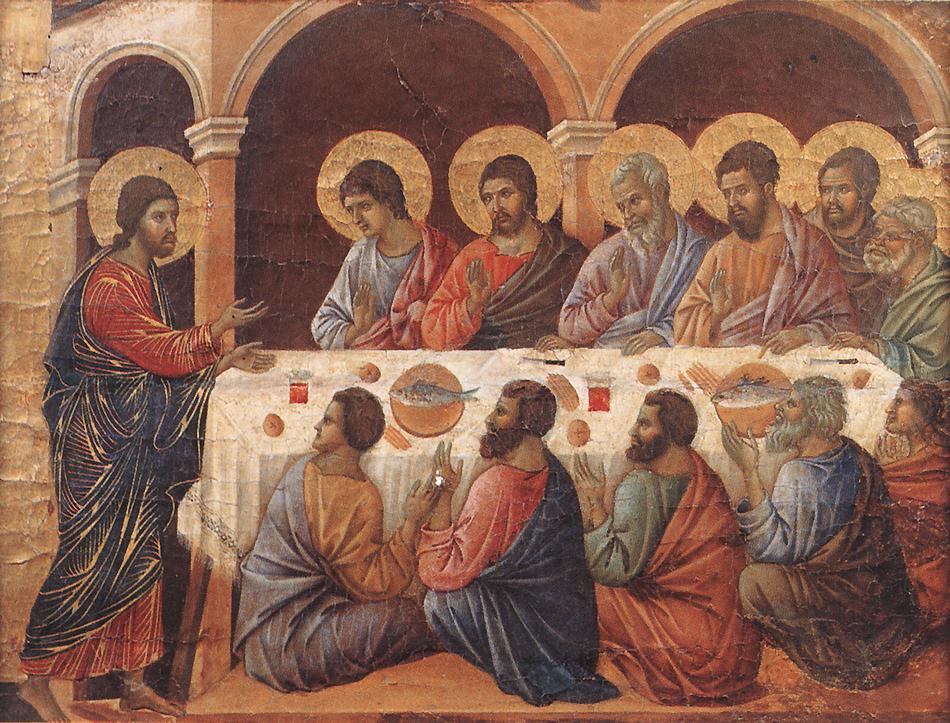
“When Paul writes to the Corinthians about the Last Supper,” she replied, “he says, “for as often as you eat this bread and drink the cup, you proclaim the Lord’s death until he comes. Whoever, therefore, eats the bread or drinks the cup of the Lord in an unworthy manner will be answerable for the body and blood of the Lord. Examine yourselves, and only then eat of the bread and drink of the cup. For all who eat and drink without discerning the body, eat and drink judgment against themselves (1 Corinthians 11:26-29).”
“So,” Beatrice continued, “Paul says that a major element in preparing to receive Jesus is to “discern the body.” Whose body? He says it in verse 27: “whoever eats the bread or drinks the cup of the Lord in an unworthy manner will be answerable for the body and blood of the Lord.” As in, the Body and Blood of Jesus.”
“Wait, but Paul calls it “bread!”” I said.
“Sure,” she replied, “that isn’t a problem. Jesus is also called “the true bread come down from heaven” (John 6:32), and “the true drink” (John 6:52). This doesn’t take away from the Catholic belief that the substance of bread and wine changes into the substance of Christ’s Body and Blood. Everyone agrees that the “sign” – or appearances – of the bread and wine remains. Calling something by what it looks like doesn’t detract from what it actually is.”
“Well,” I replied, “I still think that someone could argue that Catholic and Protestant communion is basically the same thing. A Protesant receives communion in faith, and draws closer to Jesus, just like a Catholic. A Protestant can know Jesus and experience a special intimacy with Him in communion, too. It’s the same idea.”
“This isn’t a contest about who has more intimacy with Jesus!” Beatrice said. “This is a discussion about what Jesus instituted, and what the entire early church believed since the beginning of Christianity! Catholics believe that Jesus gives us His Real Presence through the holy sacrifice of the Mass- the fullness of His Body, Blood, Soul, and Divinity – because He wants us to be as united to Him as possible. He wants to give us the true “living bread” from heaven, the true “manna” in the wilderness, the “food that lasts forever,” until the day we see Him face to face. It is the single-greatest gift on earth. You have just got to understand…”
Her voice trailed off, and she grew quiet.
“You have got to understand,” she said again, now turning and looking at me. “It is not the same thing.”
I suddenly realized she had tears in her eyes.
I was shocked. In the two-plus decades since I’d known her (and we’d remained very close), I could count on one hand the number of times I’d seen her cry. One of those times was not the day she broke both major bones of her leg after falling off a swing.
Her tears left me speechless. This woman – a physics major from one of the top universities in the country, who was currently operating nuclear-powered Navy aircraft carriers for a living – was not prone to resorting to emotional appeals. The impact of this moment was immense.
“It isn’t the same,” she said again, blinking rapidly. “It isn’t just a memorial, it isn’t just a symbol, it isn’t just Jesus “spiritually there.” We are really talking about Jesus Himself, truly there in our midst, giving Himself to us. If it’s true, if Catholics are right that it was the will of Jesus to give us this gift, then is there anything on earth more beautiful or important than that?”
Silence beat through the long seconds.
Would there be anything more important?
No. But that didn’t mean it was true.
“I’m still annoyed that Catholics think this supposedly-amazing thing is only reserved for them,” I said, bulldozing through the emotional moment. “Can’t anyone believe they are “re-presenting” the one perfect sacrifice of Jesus, at any church? Who is to say that this only happens through the “instrumentality” of the priest?”
“Catholics believe the special privilege of presiding at Mass, and saying the words of the consecration, is handed down through the authority of the apostles,” Beatrice answered. “A priest is a representative of the authority of his bishop, who traces his lineage back to one of the apostles. This comes back to apostolic succession and the laying-on of hands.”
“Did the apostles believe in the “Real Presence” of Jesus, when they gathered together after Jesus ascended into heaven?”
“Yes. Every Christian for the first fifteen centuries of history believed in the Real Presence of Jesus at the Mass,” she replied. “Go back to the early church.”
I decided to do just that.
Further Reading
Articles:
Thomas Aquinas; Question 75. The change of bread and wine into the Body and Blood of Christ
Catechism of the Catholic Church: The Sacrament of the Eucharist
Transubstantiation for Beginners
The Real Presence of Jesus Christ in the Sacrament of the Eucharist: Basic Questions and Answers
Books:
Jesus and the Jewish Roots of the Eucharist, Brant Pitre
The Fourth Cup: Unveiling the Mystery of the Last Supper and the Cross, Scott Hahn
 All the Gifts
Beautiful explanation and breakdown. You cover all bases, and I have learned immensely. I love your explanation of the greek words phago vs trogo.
LikeLike
This really touched my
heart. Also, I feel like someone must have been listening in on my conversations because has have said and asked these exact questions and had these exact thoughts.
LikeLike