- Presence in its fullest sense
“God, infinitely perfect and blessed in himself, in a plan of sheer goodness, freely created man to make him share in his own blessed life. For this reason, at every time and in every place, God draws close to man.”
I was sitting on the dock, the first page of the Catechism of the Catholic Church open on my lap. My legs dangled over the bay, hovering inches from the dark blue water. I paused from reading, watching the undulating water refract the Florida sunshine in the breezy October air.
I was surrounded by beauty. The sun, the wind, the waves – and the beauty of the words on the page. I felt like I could swim in these words for hours.
“Wow,” I murmured to myself, looking up from the book. “Not a bad start.”
I was beginning a new phase of my quest to prevent my best friends – Beatrice, and my brother Brendan – from becoming Catholic. My plan was to learn what the Catholic Church believed, in its own words, so I could finally understand what I was up against. Over the many months of arguing about Catholicism with my friends, it had become abundantly clear that I had a thousand “issues” with Catholicism that no one – not even the Catholic Church – actually believed. It was time to do something brand new in my journey thus far: let the Catholic Church speak for itself.
I looked back down at the Catechism and kept reading.
“He calls man to seek him, to know him, to love him with all his strength. He calls together all men, scattered and divided by sin, into the unity of his family, the Church. To accomplish this, when the fullness of time had come, God sent his Son as Redeemer and Savior. In his Son and through him, he invites men to become, in the Holy Spirit, his adopted children and thus heirs of his blessed life.”
True. All true, and beautifully said. However, my specific focus today was to understand the Catholic teaching on the Eucharist. Then, I planned to compare those claims with the beliefs of the earliest Christians. Then I would convince Beatrice and Brendan not to become Catholic. Ideally. Searching for writings on the Eucharist, I flipped to the Catechism’s table of contents and began to skim down the list. “Wow,” I thought to myself. “I want to read all of this.” Topics like ‘Sacred Scripture in the Life of the Church,’ and ‘the Mysteries of Jesus’ Infancy and Hidden Life,’ and ‘Mary’s Motherhood with Regard to the Church,’ seemed to leap out at me. Finally, my eyes landed on ‘The Sacrament of the Eucharist.’
Holding the pages down in the strong wind, I found part two, section two, article three, and began to read.
“The Eucharist is the efficacious sign and sublime cause of that communion in the divine life and that unity of the People of God by which the Church is kept in being. It is the culmination both of God’s action sanctifying the world in Christ and of the worship men offer to Christ and through him to the Father in the Holy Spirit.”
I thought back to my conversation with Beatrice about the Eucharist. The gravity and wonder and joy she conveyed while explaining the Catholic understanding of the Eucharist seemed to reverberate through these words, too. I kept going.
“Finally, by the Eucharistic celebration we already unite ourselves with the heavenly liturgy and anticipate eternal life, when God will be all in all. In brief, the Eucharist is the sum and summary of our faith: “Our way of thinking is attuned to the Eucharist, and the Eucharist in turn confirms our way of thinking” (St. Irenaeus).””
The “Eucharistic celebration” – the Catholic Mass – was how Catholics unite themselves to the “heavenly liturgy”? I remembered Beatrice explaining that the Mass was like “a window into heaven, where the one perfect sacrifice of Christ is offered to God, and God eternally accepts it.” For a Catholic, the Eucharist was both the biggest deal on earth and a glimpse into heaven. I stared out at the waves as my heart seemed to burn with a longing to truly and fully understand why. I couldn’t turn the pages fast enough when I found a relevant header in the table of contents: part two, section two, article three, chapter five:
“The mode of Christ’s presence under the Eucharistic species is unique. It raises the Eucharist above all the sacraments as “the perfection of the spiritual life and the end to which all the sacraments tend (St. Thomas Aquinas).” In the most blessed sacrament of the Eucharist “the body and blood, together with the soul and divinity, of our Lord Jesus Christ and, therefore, the whole Christ is truly, really, and substantially contained” (Council of Trent). “This presence is called ‘real’ – by which is not intended to exclude the other types of presence as if they could not be ‘real’ too, but because it is presence in the fullest sense: that is to say, it is a substantial presence by which Christ, God and man, makes himself wholly and entirely present” (Paul VI).””
‘”The whole Christ,’”I repeated to myself, “the body, blood, soul, and divinity of Jesus, truly, really, and substantially contained in the Eucharist.” I paused, mulling over the enormity of this claim. Catholics believe that Jesus is fully present in the Eucharist – that it really becomes Christ’s Body and Blood. I looked out across the water once more. “But how does this happen?” I wondered.
Looking back down, I saw that the next section of the Catechism seemed to answer this question.
“It is by the conversion of the bread and wine into Christ’s body and blood that Christ becomes present in this sacrament. The Church Fathers strongly affirmed the faith of the Church in the efficacy of the Word of Christ and of the action of the Holy Spirit to bring about this conversion. Thus St. John Chrysostom declares: It is not man that causes the things offered to become the Body and Blood of Christ, but he who was crucified for us, Christ himself. The priest, in the role of Christ, pronounces these words, but their power and grace are God’s. This is my body, he says. This word transforms the things offered (emphasis mine).”
According to the Catholic Church, Jesus becomes fully present in the Eucharist when the priest pronounces Christ’s “efficacious” words. It is the power of the Word of Christ and the action of the Holy Spirit which bring about the conversion of bread and wine into the Body and Blood of Christ. This belief, the Catholic Church claims, is “strongly affirmed” by the church fathers.
There were more quotes from early church writings that followed, but I knew I wanted to read historical claims elsewhere – in a definitively less Catholic context.
Hopping up from the dock, I jogged back to the house.
“Babe!” I called out as I burst through the back door. “Where is that ‘Documents of the Christian Church’ book?”
His voice filtered down the stairs. “Your copy or my copy?”
“Either!” I yelled back. I was eager to get started. Now that I felt like I had a plan, this search had become exhilarating.
My husband directed me to my copy of the book. “Let me know what you find!” Ryan called down to me. Assuring him that I would, I settled down with the book and with my computer, ready at last to learn if the earliest Christians believed what the Catholics believe today.
- This food is the flesh and blood of Jesus
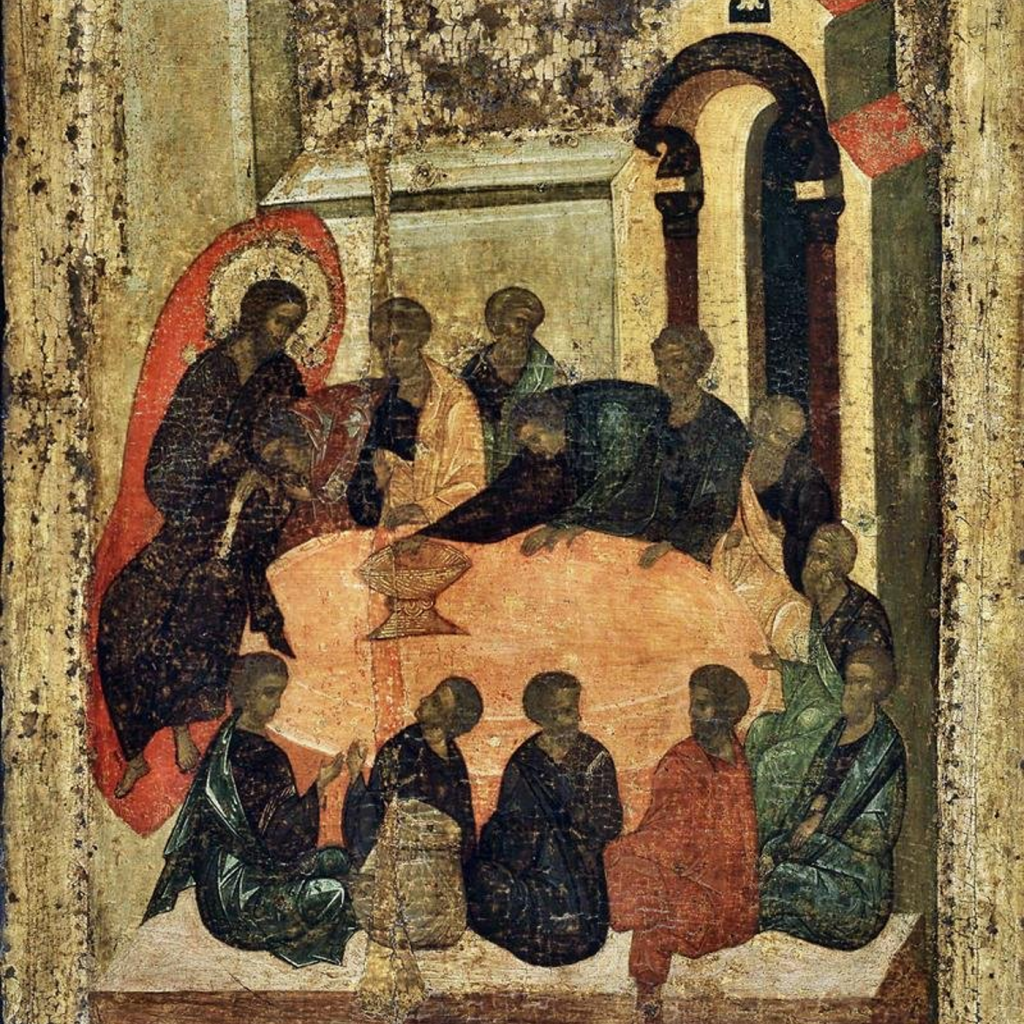
I opened ‘Documents of the Christians Church’ and turned to the section on ‘Christian Worship in the Second Century.’ The first church father listed was Justin Martyr, writing his ‘First Apology’ in 155 A.D. The original document was addressed to Emperor Antoninus Pius as an attempt to explain the faith.
“We salute one another with a kiss when we have ended the prayers. Then is brought to the president of the brethren bread and a cup of water and wine. And he takes them and offers up praise and glory to the Father of all things, through the name of his Son and of the Holy Ghost, and gives thanks at length that we are deemed worthy of these things at his hand. When he has completed the prayers and thanksgiving all the people present assent by saying Amen. Amen in the Hebrew tongue signifies ‘So be it.’ When the president has given thanks and all the people have assented, those who are called deacons with us give to those present a portion of the Eucharistic bread and wine and water, and carry it away to those that are absent.”
I closed my eyes. Unbidden, countless flashbacks of the Masses of my childhood flooded into my mind. The kiss of peace, the bringing of the water and wine, the prayers and thanksgiving. The sun streaming through the soaring stained glass, and the priest holding up the bread to God.
I hadn’t thought of it in years, but I heard it once more: “Blessed are you, Lord, God of all creation. Through your goodness we have this bread to offer, which earth has given and human hands have made. It will become for us the bread of life.”
The response of the congregation – “blessed be God forever” – seemed to echo around me once more. It felt surreal, to read an ancient document and be transported to my own childhood.
Shaking my head to clear my mind, I turned back to the next lines from Justin Martyr.
“This food is called with us the Eucharist, and of it none is allowed to partake but he that believes that our teachings are true, and has been washed with the washing for the remission of sins and unto regeneration, and who so lives as Christ directed.”
I snorted to myself. I’d called Beatrice “elitist” for saying that only Catholics could receive the Eucharist at Mass. Did Justin Martyr agree with her two thousand years ago?
I read the next paragraph. Then I stopped. I started the same paragraph over. I read it again, and then read it again three more times.
“For we do not receive them as ordinary food or ordinary drink; but as by the word of God, Jesus Christ our Savior took flesh and blood for our salvation, so also, we are taught, the food blessed by the prayer of the word which we received from him, by which, through its transformation, our blood and flesh is nourished, this food is the flesh and blood of Jesus who was made flesh. For the Apostles in the memoirs made by them, which are called gospels, have thus narrated that the command was given; that Jesus took bread, gave thanks, and said, ‘This do ye in remembrance of me; this is my body.’ And he took the cup likewise and said, ‘This is my blood,’ and gave it to them alone.”
I sat silently, staring at the words “this food is the flesh and blood of Jesus who was made flesh.” My eyes seemed to bore a hole in the page.
If I was Emperor Antoninus Pius, and I received this letter from Justin Martyr, I definitely would not read the letter and conclude that the Eucharist was only a symbol. In fact, Justin seems to tie the literalness of Christ’s incarnate flesh and blood with the literalness of the flesh and blood of the Eucharist.
Furthermore, it seemed that Justin was connecting the power of the ‘Word’ of God – Jesus – with the power of “the prayer of the word which we received from him.” Meaning, if Jesus’ words could change a broken limb into a healed limb, or a possessed man into a free man, wasn’t it plausible that Jesus could also say, “this is my body,” and transform ordinary bread into His true flesh?
Was Justin claiming that the same flesh and blood of the incarnate God was also present in the Eucharist?
I sat completely still in our kitchen, letting the silence wash over me as I pondered the enormity of this question.
It could change everything.
- I desire the bread of God, the heavenly bread, the bread of life, which is the flesh of Jesus Christ
Next I turned to Ignatius of Antioch. Ignatius, discipled by the apostle John and appointed bishop of Antioch by Peter, wrote a letter to the Smyrnaeans in 110 A.D. – 45 years earlier than Justin Martyr.
Ignatius wrote, “take note of those who hold heterodox opinions on the grace of Jesus Christ which has come to us, and see how contrary their opinions are to the mind of God. . . . They abstain from the Eucharist and from prayer because they do not confess that the Eucharist is the flesh of our Savior Jesus Christ, flesh which suffered for our sins and which that Father, in his goodness, raised up again. They who deny the gift of God are perishing in their dispute.”
Ignatius, who sat at the feet of John, who walked with Jesus, is proclaiming that the “heterodox” – those not conforming with accepted beliefs – are those who do not confess that the Eucharist is the flesh of our Savior Jesus Christ.
“Wait,” I thought to myself. “So, does this make me “heterodox” too?”
I read the letter again. Ignatius seemed to take a similar approach to Justin Martyr, tying the incarnation of Christ – the literalness of His human flesh, with the literalness of the flesh offered in the Eucharist. Ignatius claimed that the same “flesh which suffered for our sins” is the “flesh of our Savior Jesus Christ.”
I turned to another of Ignatius’ writings, this time to the Romans. Ignatius was writing to the Romans while on his journey to be martyred – devoured by beasts in the Colosseum – for his faith. Ignatius said, “My love has been crucified, and there is no fire in me desiring to be fed; but there is within me a water that lives and speaks, saying to me inwardly, Come to the Father. I have no delight in corruptible food, nor in the pleasures of this life. I desire the bread of God, the heavenly bread, the bread of life, which is the flesh of Jesus Christ, the Son of God, who became afterwards of the seed of David and Abraham; and I desire the drink of God, namely His blood, which is incorruptible love and eternal life.”
While anticipating his heavenly union with God, Ignatius clearly testifies that the bread of God is the flesh of Jesus, and the drink of God is His blood.
I wasn’t sure what to think. Justin and Ignatius sounded… Catholic.
“But” I said to myself, “that’s still only two people. Who else wrote on this?”
- Nourished from the body and blood of the Lord
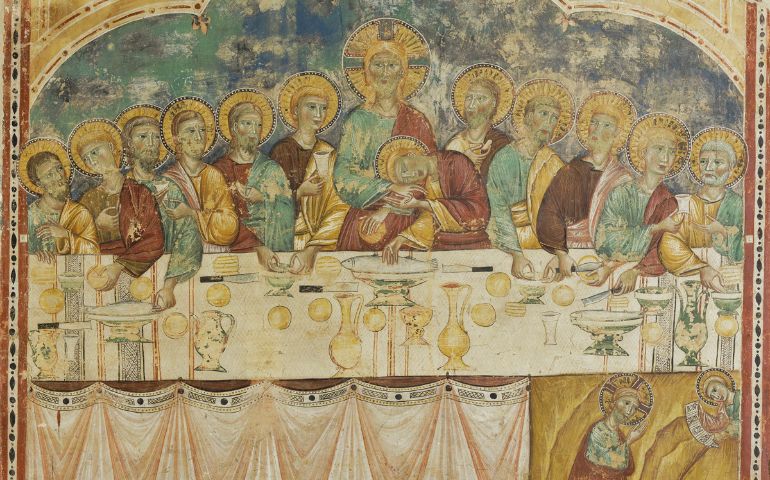
Irenaeus was next. A student of Polycarp – who was a student under John the apostle – Irenaeus was a missionary in southern France who was later made bishop of Lyon. In 189 A.D. he wrote,
“When, therefore, the mingled cup and the manufactured bread receives the Word of God, and the Eucharist of the blood and the body of Christ is made, from which things the substance of our flesh is increased and supported, how can they affirm that the flesh is incapable of receiving the gift of God, which is life eternal, which [flesh] is nourished from the body and blood of the Lord, and is a member of Him?— even as the blessed Paul declares in his Epistle to the Ephesians, that we are members of His body, of His flesh, and of His bones (Ephesians 5:30). He does not speak these words of some spiritual and invisible man, for a spirit has not bones nor flesh (Luke 24:39) but [he refers to] that dispensation [by which the Lord became] an actual man, consisting of flesh, and nerves, and bones — that [flesh] which is nourished by the cup which is His blood, and receives increase from the bread which is His body.”
I paused, thinking deeply about this. The portion, “the cup which is His blood…the bread which is His body,” was striking to me. In general, I was surprised at how blunt these writers seemed. If the Eucharist was only a symbol, one would think these church fathers wouldn’t use such intense literal language about the bread being Jesus’ Body. Clearly, Justin, Ignatius, and Irenaeus don’t think the Eucharist is just a symbol.
I thought hard for a few more moments. A few weeks prior I’d read John Calvin’s Treatise on the Lord’s Supper, in which Calvin claims that some church fathers actually call the Eucharist a ‘figure,’ or a ‘symbol,’ or a ‘sign.’ I definitely needed to read up on how Protestants interpreted the church fathers. But before searching other fathers for references to this supposed ‘symbol-only’ view, I decided to first see what the Catechism had to say about the Eucharist and symbolism. After all, the Catholic Church claims that Jesus is truly present in the Eucharist – but does it also claim that the Eucharist is also a symbol? I thought back to my reading, earlier on the dock. The Catechism definitely called the Eucharist an “efficacious sign.” Maybe Catholics claim the Eucharist is both the real presence of Jesus and a ‘sign,’ which would account for other church fathers occasionally using symbolic language.
- A visible sign of an invisible reality
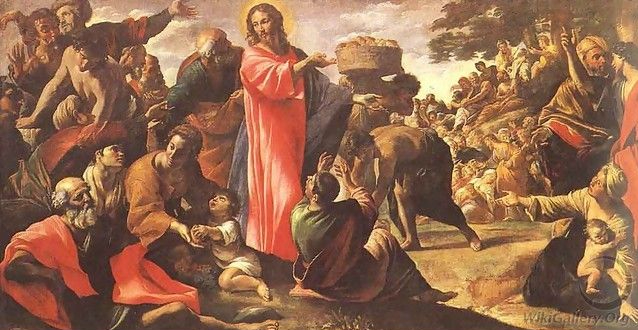
Paragraphs 1145-1152 of the Catechism explain the Catholic conception of signs and symbols. “In human life, signs and symbols occupy an important place…these perceptible realities can become means of expressing the action of God who sanctifies men, and the action of men who offer worship to God…The sacraments of the Church do not abolish but purify and integrate all the richness of the signs and symbols of the cosmos and of social life. Further, they fulfill the types and figures of the Old Covenant, signify and make actively present the salvation wrought by Christ, and prefigure and anticipate the glory of heaven.”
So, Catholics believe that signs and symbols “make present” the salvation wrought by Christ. But is this concept explicitly tied to the Eucharist?
The Council of Trent, convened in 1545 and the official response to the Protestant reformation, says that Jesus, “declaring Himself constituted a priest for ever, according to the order of Melchizedek, He offered up to God the Father His own body and blood under the species of bread and wine; and, under the symbols of those same things, He delivered (His own body and blood) to be received by His apostles, whom He then constituted priests of the New Testament; and by those words, Do this in commemoration of me, He commanded them and their successors in the priesthood, to offer (them); even as the Catholic Church has always understood and taught (emphasis added).”
A quick search led me to a helpful summary by Catholic apologist Gary Michuta. “Catholic teaching on the Eucharist is much more complex than saying it is Christ’s body and blood. It is a Sacrament, which is a visible sign (symbol, type, figure) that points to an invisible reality (Christ Himself). Many non-Catholics are surprised that the Catholic Church teaches that the Eucharist is a symbol (in regards to the Sacramental species or its outward appearances)…When the early Fathers speak of the Eucharist in terms of its species (the mode in which it is given to us), it is correct to use terms like symbols, figures, types, and the like. However, when one is speaking about the invisible reality of the Eucharist (Christ Himself), we cannot speak of it as symbolic.”
I searched through early church writings, looking for the quotes Protestants often use to support their claim that the Eucharist is a symbol – such as Tertullian’s Against Marcion or Augustine’s On Christian Instruction. But there was nothing there that contradicted the Catholic claim that the Eucharist is also a “figure.” More importantly, there were numerous other examples from both Tertullian and Augustine – even just further down the page! – where they explicitly call the Eucharist the “Body of the Lord.”
This was fascinating, not to mention concerning. While I loved swimming deep in history and reading these original texts, I had no idea what to make of all of this.
- The bread becomes the Body of Christ
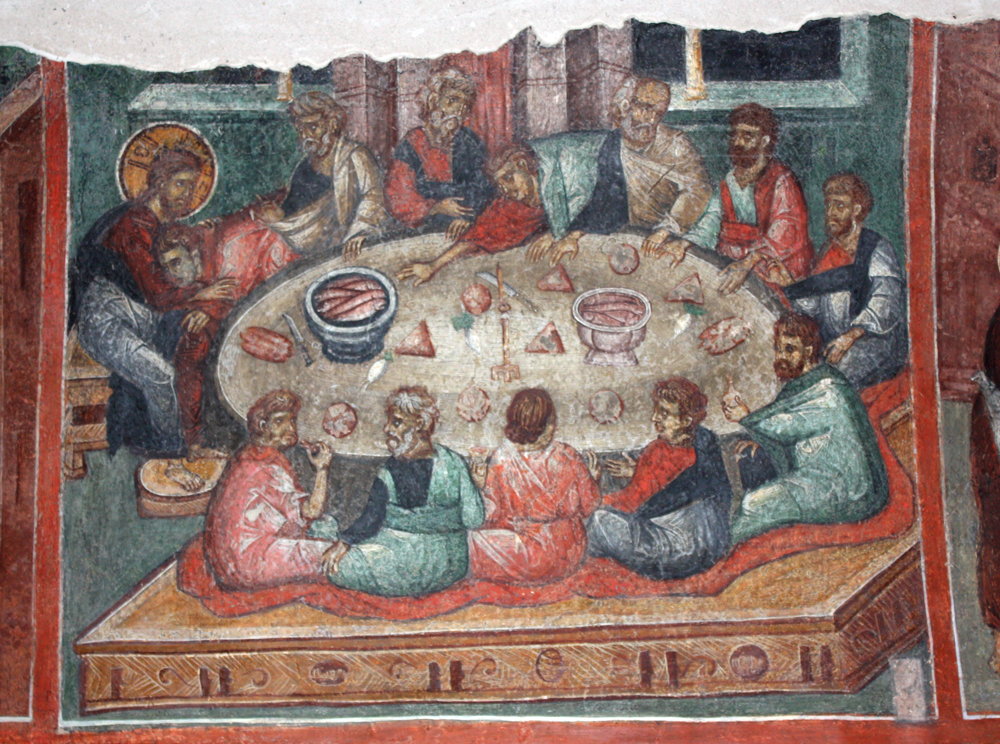
I knew I needed to read as many church fathers as possible on the Eucharist, so I kept going.
Clement of Alexandria, A.D. 191: “‘Eat my flesh,’ [Jesus] says, ‘and drink my blood.’ The Lord supplies us with these intimate nutrients, he delivers over his flesh and pours out his blood, and nothing is lacking for the growth of his children.”
Origen, A.D. 248: “Formerly there was baptism in an obscure way . . . now, however, in full view, there is regeneration in water and in the Holy Spirit. Formerly, in an obscure way, there was manna for food; now, however, in full view, there is the true food, the flesh of the Word of God, as he himself says: ‘My flesh is true food, and my blood is true drink’ [John 6:55].”
Cyril of Jerusalem, Bishop, A.D. 350: “The bread and the wine of the Eucharist before the holy invocation of the adorable Trinity were simple bread and wine, but the invocation having been made, the bread becomes the body of Christ and the wine the blood of Christ.”
Cyril of Jerusalem: “Now that you have had this teaching and are imbued with surest belief that what seems to be bread is not bread, though it has the taste, but Christ’s body, and what seems to be wine is not wine, even if it appears so to the taste, but Christ’s blood.”
Ambrose of Milan, Bishop, A.D. 390: “We have proved the sacraments of the Church to be the more ancient, now recognize that they are superior. In very truth it is a marvellous thing that God rained manna on the fathers, and fed them with daily food from heaven; so that it is said, So man ate angels’ food. But yet all those who ate that food died in the wilderness, but that food which you receive, that living Bread which came down from heaven, furnishes the substance of eternal life; and whosoever shall eat of this Bread shall never die, and it is the Body of Christ.”
Theodore of Mopsuestia, A.D. 405: “When [Christ] gave the bread he did not say, ‘This is the symbol of my body,’ but, ‘This is my body.’ In the same way, when he gave the cup of his blood he did not say, ‘This is the symbol of my blood,’ but, ‘This is my blood’; for he wanted us to look upon the [Eucharistic elements] after their reception of grace and the coming of the Holy Spirit not according to their nature, but receive them as they are, the body and blood of our Lord. We ought . . . not regard [the elements] merely as bread and cup, but as the body and blood of the Lord, into which they were transformed by the descent of the Holy Spirit.”
John Chrysostom, Bishop of Constantinople (d. 407): “It is not the man who is responsible for the offerings becoming Christ’s body and blood, it is Christ himself, who is crucified for us. The standing figure [at Mass] belongs to the priest who speaks these words, the power and the grace belong to God. ‘This is my body,’ he says. This sentence transforms the offerings.”
Cyril of Alexandria, Bishop (d. 444): “He used a demonstrative mode of speech, `This is my body’ and ‘This is my blood,’ to prevent your thinking that what is seen is a figure; on the contrary what has truly been offered is transformed in a hidden way by the all-powerful God into Christ’s body and blood. When we have become partakers of Christ’s body and blood, we receive the living, giving, sanctifying power of Christ.”
- One thousand, five hundred, and twenty-nine years
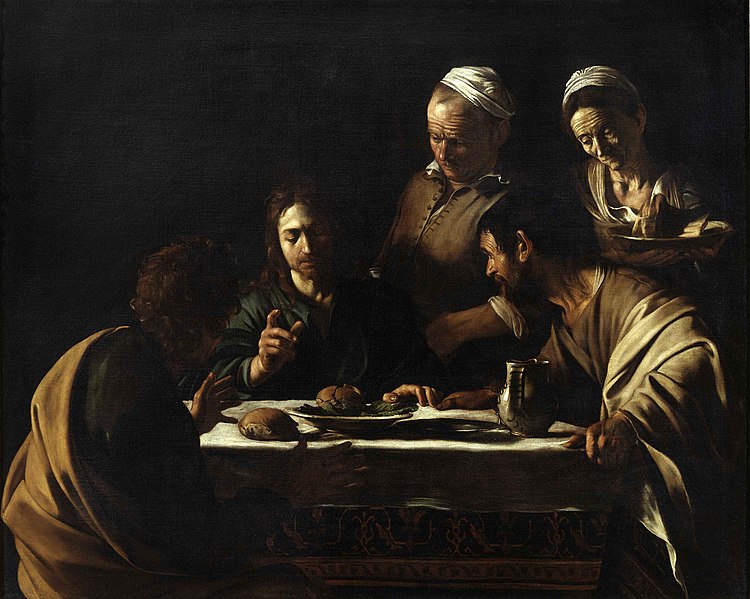
I rubbed my forehead, attempting to straighten up in my chair. Hours had passed, and I felt like I hadn’t exhaled yet.
I couldn’t believe what I’d just read. If all of these church fathers – from Irenaeus to Justin to Cyril – believed that the Eucharist truly became the real Body and Blood of Jesus Christ, then why on earth had any Christian ever stopped believing it?
I put my head in my hands and stared down at the wooden table.
If this was true, then I was missing out on the greatest, most earth-shattering and life-changing gift that Jesus could possibly want to give to me and to everyone else on earth: Himself, truly present, in the Eucharist.
I suddenly realized I had tears in my eyes. I shook my head to clear my mind.
“Maybe I am asking the wrong question,” I murmured to myself. “Maybe instead I should ask, did anyone teach that the Eucharist was only a symbol, before the Protestant Reformation?
I searched.
Apparently, there was one guy, Paschasius Radbertus, who in the 9th century questioned whether Christ’s Eucharistic body was the same as his body as a Palenstinian man, now glorified in heaven. But his questions never extended beyond his region, and he didn’t question that it was truly Jesus’ body.
Then in the 11th century there was Berengarius, who doubted the Real Presence because he claimed it did not make sense to human reason. But apparently Berengarius later recanted, and was reconciled to the Church.
I blinked rapidly, trying to comprehend what I’d learned since sitting out on the dock many hours earlier.
For one thousand, five hundred, and twenty-nine years, until the day Ulrich Zwingli claimed that the Eucharist was only a symbol, the consensus of Christianity was that the flesh and blood of Jesus Christ was truly present in the Eucharist.
Why had I never heard this before?
“Ryan!” I yelled, this time running up the stairs. “I’m ready to talk!”
Further reading
Catechism of the Catholic Church, The Sacrament of the Eucharist
Justin Martyr, The First Apology (see chapter 66 for quoted reference)
Epistle of Ignatius to the Smyrnaeans (see chapter 6-7)
Epistle of Ignatius to the Romans (see chapter 7)
Ambrose, On the Mysteries (see chapter 8, part 47)
The Council of Trent (see chapter 1)
Tertullian, Against Marcion (see book 4, chapter 40)
Augustine, On Christian Doctrine (see book 3, chapter 16), see also sermons 227, 234, 272
Church Fathers on the Eucharist (plus Basil, Gregory, Athanasius, etc)
More Church Fathers on the Eucharist (quoted above plus Clement, Hippolytus, Cyprian, etc)
 All the Gifts
I am loving every bit of this and learning so much. What a gift!
LikeLike